You Can Just Ask: The Career Move Most Musicians Never Make
The music industry doesn't reject most musicians. It simply never hears from them.
Think about what you picture when you imagine breaking through. An A&R rep stumbles onto your Spotify. A playlist curator finds your track. A producer hears your name whispered in the right room at the right moment. The industry discovers you.
That mental representation is the problem. Not because it never happens, but because it almost never happens, and while you're waiting for it, other musicians are doing something far simpler.
They're asking.
benny blanco and the Cold Ask
benny blanco grew up in Reston, Virginia. At fourteen, he was making beats on his bedroom computer, convinced he had something real. What he did next separates him from every other teenager making beats in a bedroom that year, and there were thousands of them.
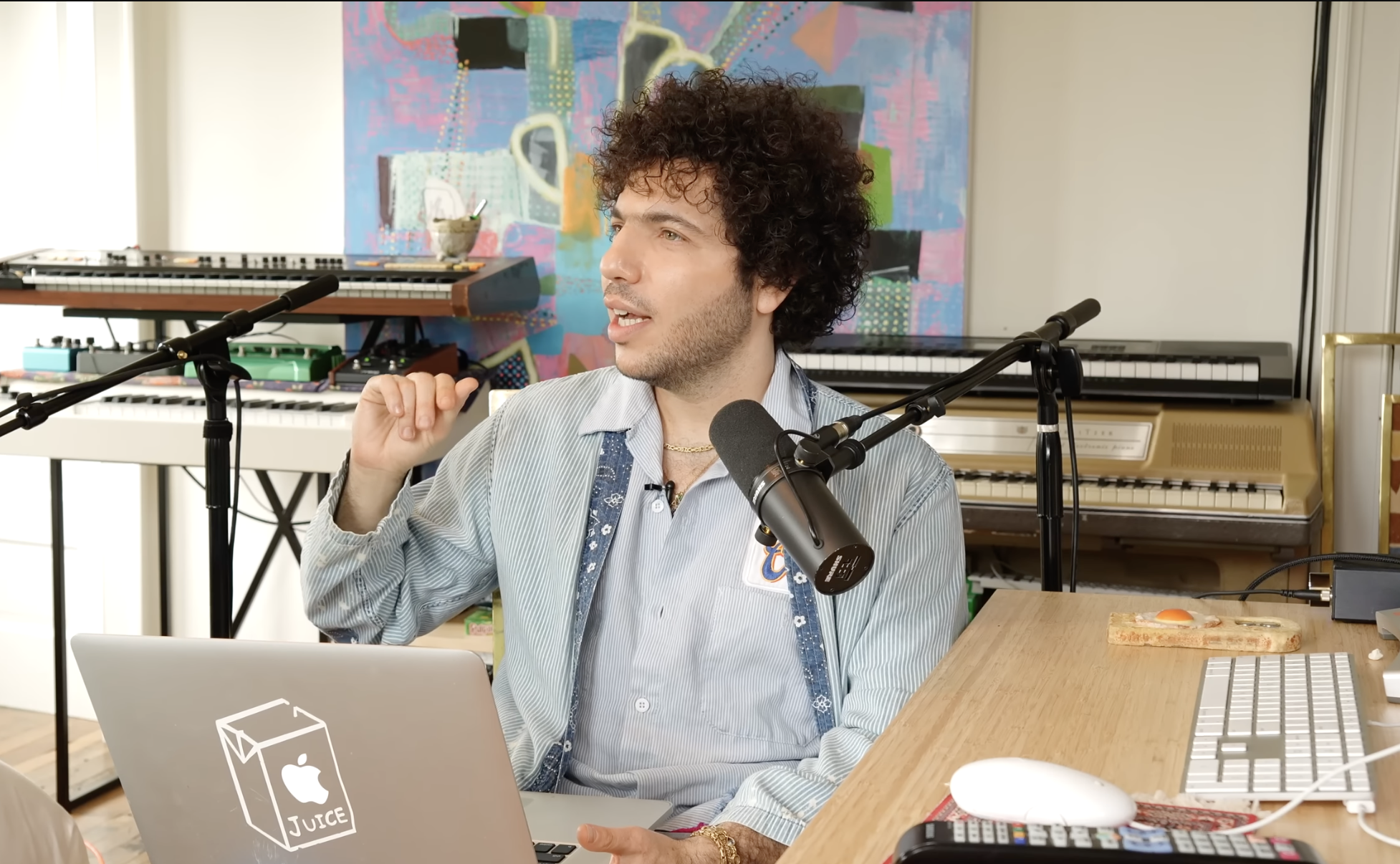
benny blanco in an interview with Daniel Wall (see sources below for link)
He went to his school library, got online, tracked down the contact information for some of the biggest names in the business, and called their offices. Cold. Because he knew a call from a Virginia teenager would get screened, he told the assistants he was JAY-Z's attorney. They'd put him through. He'd say: “please, just let me play you my demo*.”*
It didn't work. Nobody signed him on the spot. But blanco, at fourteen, was building something more valuable than a deal. He was building a tolerance for rejection.
He took five-hour bus rides from Virginia to New York to knock on studio doors. He slept in a Times Square McDonald's between meetings because he couldn't afford a hotel. He wore down a producer named Disco D until the man finally agreed to take him on as an intern. That internship was the crack in the door that eventually swung it open.
By twenty-three, Benny Blanco had co-written and co-produced Britney Spears's "Circus," which sold nearly three million copies in the US. He went on to work with Kanye West, Justin Bieber, Rihanna, and Maroon 5. He now holds eleven Grammy nominations. Interscope Records has called him one of the most sought-after hitmakers in contemporary music.
He didn't get there because he was more talented than every other kid with a laptop and a dream. He got there because he was talented and he was willing to be told no, over and over, by people with every reason to hang up. He just kept asking.
Here is what nobody tells you in a music program, a masterclass, or a career development seminar. The music industry is not a system for finding the most talented people. It is a system for finding the most persistent people who are also talented.
Talent gets you to the door. Asking is what opens it.
But the ask is not one big dramatic moment. The ask is a practice. It is something you do daily, at every stage of your career. Sometimes it is one bold move that changes the shape of your life. Sometimes it is quieter than that.
Lin-Manuel Miranda Follows Through
In 2009, Lin-Manuel Miranda met Stephen Sondheim, the defining composer of American musical theater in the twentieth century. At the end of their conversation, Miranda asked if Sondheim would be willing to stay in touch as he worked on a new project. Sondheim said yes.
Most people would stop there. They would tell the story at dinner parties for years. Sondheim said I could reach out. The offer would become a trophy, displayed and never used.
Miranda used it. For five years, through the entire development of Hamilton, he sent Sondheim drafts, questions, and revisions. Dozens of emails. He held Sondheim to the yes. He used the access he had asked for, again and again, until the work was finished.
The lesson Miranda teaches is the one that comes after the first ask. Following through is itself a form of asking. It asks the relationship to deepen. Most musicians, even when someone says yes, never make the second move. The follow-up is where the real work happens. Almost nobody does it.
How Ed Sheeran Ended Up Sleeping on Jamie Foxx’s Couch
In 2010, Ed Sheeran bought a one-way ticket to Los Angeles with one gig booked and almost no money. He did not wait for the industry to find him. He walked around the city handing demos to anyone who would take one. Radio stations. Studios. Anyone.
One day he walked into Jamie Foxx's radio studio and handed his CD directly to the man. Foxx liked what he heard. He looked at this scruffy kid and could see he was nearly broke. Foxx, a massive star with zero obligation to this stranger, said: come stay at my house. Use my recording studio. Come play my weekly show.
Sheeran stayed six weeks. He got free studio time. He played a twelve-minute set at Foxx's live music night in front of eight hundred people and got a standing ovation. Within two years, he was one of the biggest artists on the planet.
None of it happens if Sheeran waits for someone to find him. All of it happens because he showed up with a CD and asked.
“Why Don’t I just Come on Tour with You?”
Now here is where this story gets interesting.
Years after benny blanco had built his reputation, he wanted to work with Ed Sheeran. They had connected. They liked each other. They knew something good would come from a collaboration. There was one problem: Sheeran was always on tour. The schedule never opened up. Most collaborators would have waited, sent a few emails, gotten vague replies, and eventually moved on.
blanco asked a different question.
"Why don't I just come on tour with you?"
blanco said they'd set up a studio at every arena and stadium. They'd make music wherever the tour went. He planned to stay a week.
He stayed two years.
Working on tour buses, in hotel rooms, backstage at arenas, never once in a proper studio, they made Divide, Ed Sheeran's biggest album, which sold 40 million copies. They wrote "Castle on the Hill." They wrote "Perfect." On a tour bus somewhere between Canada and the US, after a night celebrating Drake's album release, they stayed up and wrote "Love Yourself" for Justin Bieber. They wrote "2002" for Anne-Marie. In total, five songs from those two years became number ones for other artists.
"I went out for a week," Blanco said, "and it turned into two years."
One question. Two careers changed. Forty million albums.
The ask seemed unreasonable. Too much. Too bold. Who goes on tour with a major artist for two years? Someone who has spent his whole life asking.
You are not trying to call Jimmy Iovine. You are not trying to sleep on Jamie Foxx's couch. The asks available to you right now are smaller, more local, and far more reachable. That is exactly the point.
The festival coordinator whose submission email is right there on the website. The working composer whose masterclass you attended last spring and who handed out a card at the end. The alum from your program who now works at a label, a booking agency, a publishing house. The podcast host who covers the exact genre you make. The bandleader in your city who is always looking for a reliable sub.
Every one of those is a door. Most musicians never knock.
Noah Kagan, in his book Million Dollar Weekend, calls this getting a gold medal in rejection. The game is not to avoid being told no. The game is to take enough shots that some of them go in. A no is not a verdict on your worth. It is one door. There are ten more on the same block.
The musicians moving right now, getting the gigs, the placements, the collaborations, the callbacks, are not all more talented than you. Many of them are not working as hard on their craft. But they are sending the emails. They are making the calls. They are walking in with the CD.
The shift from waiting to asking is mostly a mindset change. But knowing who to ask, what to ask for, and how to write an outreach message that actually gets read instead of deleted is a learnable skill. The earlier you learn it, the more doors it opens.
Reaching out to people seems straightforward, but there is a good way and a right way to do it. I built a free guide for exactly this: Just Ask: The Musician’s Outreach Playbook, designed to get you your first industry response in 30 days. It walks through how to identify the right people to reach out to, gives you cold outreach formulas that work, and includes AI prompts to help you write messages that don't sound like every other musician's pitch.
Download “Just Ask: The Musician’s Outreach Playbook”
Enter your email below to get immediate access to the playbook (free).
Sources
The Benny Blanco origin story — calling producers while pretending to be JAY-Z's attorney, the bus rides from Virginia, the nights at a Times Square McDonald's, wearing down Disco D for an internship — is drawn from two profiles: Grantland's 2013 piece on his rise as a superproducer and a Sound on Sound feature.
The Benny Blanco and Ed Sheeran tour story — the "why don't I just come on tour with you" question, the two years on the road, the five number ones for other artists, and the night they wrote "Love Yourself" after Drake's album party — comes directly from this interview with Daniel Wall, starting around the 56-minute mark. The "five No. 1 songs that didn't make the album" line is also referenced in coverage of a Benny Blanco appearance on The Howard Stern Show.
The Ed Sheeran and Jamie Foxx story — the one-way ticket to LA, walking around the city with demos, showing up at the Foxxhole studio — is covered in detail by Inc. and Variety.
The Lin-Manuel Miranda and Stephen Sondheim story — asking to stay in touch in 2009, then actually sending dozens of emails over the five years he spent writing Hamilton — comes from Broadway World's coverage of Miranda sharing the email exchange publicly, with additional detail in NME's piece on Sondheim's feedback on the early drafts.
The "gold medal in rejection" framework comes from Noah Kagan's Million Dollar Weekend, Chapter 2.