Timeless advice for creators
The life of a creator can feel lonely. But you are part of a long history and thriving community of creators—writers, musicians, filmmakers, artists. In these articles, I share examples, principles, and frameworks to help you become a better creator. Sign up to get these sent to your email each week.

Lift Heavy Thoughts
You’ve probably heard by now that we’re all getting dumber.
Our ability to focus is slipping away. We hear in the news that the IQ of young people today is, for the first time on record, lower than their parents’ IQ. AI is waiting with open arms to offload all of your boring, laborious thoughts, like AUTO, the destruction-bent autopilot in WALL-E.
Our phones are sucking away our life force like the Petrova Line sucks away the heat of the sun.
Our decline has been documented, and discussed, and explained. The end of humanity is near.
But is all this actually true? When abstracted to the level of the population, much of the warnings have high probability windows. But that only tells part of the story.
The Reason You Haven’t Broken Through Isn’t About Talent
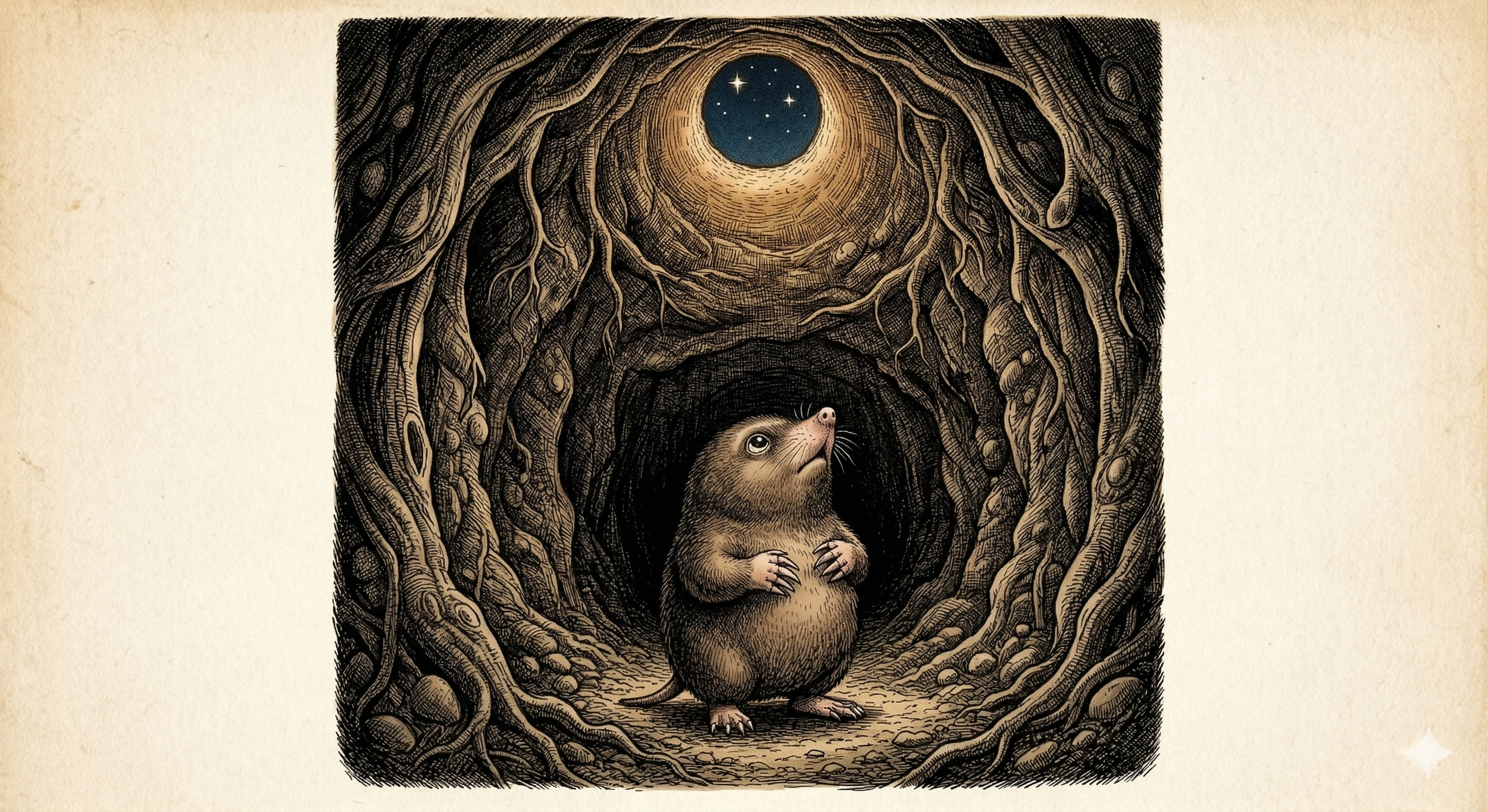
A mole lived underground. Every morning he woke with one dream: to see the sky. He would look up at the ceiling of his tunnel and think, one day I will see the sky.
His neighbors shook their heads. "There is no sky," they said. "There is only dirt. The sky is brown. Be grateful for what you can reach."
Then one day a rabbit traveler passed through the mole community. "The sky is not brown," the rabbit said. "The sky is green. I have seen it myself."
The mole felt his heart pound. He gathered his courage and asked, "Can I come with you?"
So he went.
You Can Just Ask: The Career Move Most Musicians Never Make
The music industry doesn't reject most musicians. It simply never hears from them.
Think about what you picture when you imagine breaking through. An A&R rep stumbles onto your Spotify. A playlist curator finds your track. A producer hears your name whispered in the right room at the right moment. The industry discovers you.
That mental representation is the problem. Not because it never happens, but because it almost never happens, and while you're waiting for it, other musicians are doing something far simpler.
They're asking.

Seventy-Seven Scrapbooks: Six Days in the Life of a Pop Musicologist
Well, that was a week.
I went to Washington, D.C. to give a paper at the International Association for the Study of Popular Music (IASPM) conference and do research at the Smithsonian. The research is for Sway, my book arguing that promotion didn't just circulate American music, it shaped artists' images, legacies, and sometimes the music itself. The Ellington chapter is that argument made concrete, and Ellington's archives are at the National Museum of American History in D.C. So I went early. I got back in the stacks.
It started at the Lincoln Memorial at dawn and ended at the National Museum of African American History and Culture on a Saturday afternoon. In between: five days of archive work, a major conference presentation, and an NPR Tiny Desk story I'm still thinking about.
Let me take you through it.

How I Decide What's Worth Writing Down
There's a note-taking problem that nobody talks about.
It's not that people don't take notes. Most of us take too many. We highlight. We screenshot. We copy-paste entire articles into Notion folders we'll never open again. We dog-ear pages and stick Post-it notes to things and then wonder, six months later, why none of it ever turned into anything.
I've been thinking about this a lot lately, because I've watched smart, creative people build beautiful note-taking systems. Gorgeous Obsidian vaults, color-coded Notion databases, perfectly organized Readwise libraries, all functioning, in practice, as very elegant graveyards. Full of ideas. None of them alive.
The system isn't the problem. The filter is.

Creative Block? Go on a Walk.
It’s been one of those days. You are creatively blocked. No juices flowing. No ideas. Your mind spins in an endless loop, going nowhere. The canvas stays blank. The strings on your guitar sound flat. The cursor blinks at you with a sneer.
This is what creative paralysis feels like. Being locked inside your skull, unable to move.
I want to suggest an age old solution to your creative block: go on a walk.
There’s an old saying, attributed to the Greek philosopher Diogenes the Cynic: solvitur ambulando. “It is solved by walking.”
We all know walking is good for us. If you spend your days at a desk, you’ve been told to stand more, to stretch, to “get in your steps.” But walking isn’t just exercise. It is fuel for creativity.

To Grow, Invest in Loss
In The Art of Learning, Joshua Waitzkin tells the story of his early days training in Push Hands, a Tai Chi practice. He had a classmate named Evan, and every time they stepped onto the mat, Evan smashed him around. Not once or twice—every session, for months.
It was humbling. Sometimes humiliating.
But Waitzkin kept coming back. Because he knew that the fastest way to grow wasn’t to avoid these beatings, it was to seek them out.
He calls it “investment in loss”—the practice of deliberately putting yourself in situations where you are overmatched. Not to prove anything. Not to protect your ego. But to find out, as quickly as possible, where your weaknesses are.
My Note Card System: How to Remember and Use What You Read
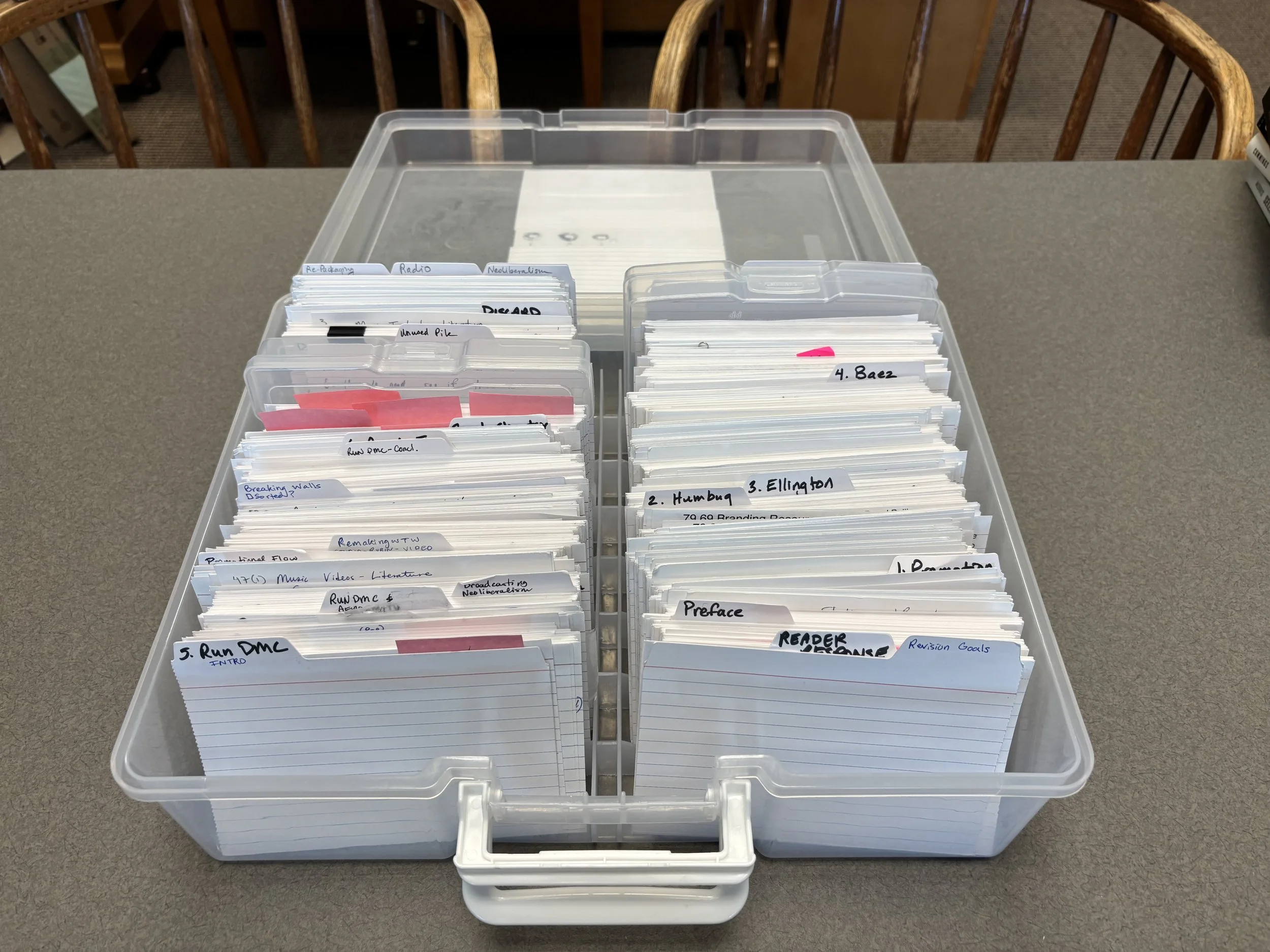
If you were to visit my office and look around, you might notice my obsession with note cards.
4x6 inch notecards are seemingly everywhere. In stacks on my desk, more on my shelves. Stuck to the pinboard on my wall. Note cards taped to my computer monitor. A stack of blank note cards is always within arm’s reach.
I get asked every so often about how I do my research, and today I’m going to share with you the most important part of my research system.
It’s how I remember everything I read, how I find it when I need it, and how I transform my thoughts into writing.
It’s my note card system.

Great Artists Don’t Starve
The legend says artists must suffer. That fame and fortune come only after death. That struggle is always noble, and successful artists always sell out.
That’s nonsense.
In 1850, Jenny Lind stepped off a ship into New York Harbor and into a nation already obsessed with her. She was a soprano from Sweden, called "The Swedish Nightingale."
The Swedish Nightingale, Jenny Lind, was the most famous singer of her generation.
She had never performed in the United States, and she was already the most famous singer in America.
How?
Because she didn’t come alone. She came with a strategy—and with P.T. Barnum.

Creative Deep Sea Diving
To do your best creative work, you have to go somewhere most people never go.
Imagine there’s work that can only be done at the bottom of the ocean.
Not in the shallows. Not mid-descent. But down deep—where the pressure is high and the surface world disappears.
That’s the Deep Sea Diving Framework for creative work.
There are certain kinds of work—writing, composing, painting, designing, coding, practicing—that only happen when you’re fully immersed. No distractions. No dings. No surface noise.

🍀 The Four Types of Luck
Do you believe in luck? More to the point, do you believe that you can do anything to make you luckier in your creative career? To catch more lucky breaks?
You probably have someone in your life who always seems to somehow get lucky. Things just seem to work out for them.
They go to a coffee shop and end up meeting the CEO of a company and getting a job offer.
They go out on the town and somehow end up in the VIP room partying with a celebrity.
They go to a concert and end up backstage hanging with the band.
As it turns out, this blessed friend is likely doing something to influence their lucky outcomes.
They are increasing their luck surface area.

How to Live a Fulfilling Life: CWU Music Graduate Commencement Speech, 2025
It's graduation season, and in my day job, I teach in the Music Department at Central Washington University. Last night we had a ceremony for the music graduates, and I gave a talk on how to live a fulfilling life. Maybe you need to hear something from this talk as well. Here it is:
How to Live a Fulfilling Life: CWU Music Graduate Commencement Speech, 2025
Dr. Mark Samples
June 9, 2025, 7 p.m.
Welcome to this special evening—to my fellow faculty members, music staff, parents, family, friends, and most of all, the distinguished music graduates of 2025.
It is June 9th, in the year 2025, in the State of Washington, in the city of Ellensburg. On the campus of Central Washington University, in the Jerylin S. McIntyre Music Building, and joined by the virtual presence of all who are with us viewing online, we are gathered in the recital hall to honor and celebrate you, the graduates.
I know what some of you are thinking. You’re looking around at your friends, your loved ones, your professors, and thinking—I should probably be practicing right now.

What Every Indie Artist Can Learn from Taylor Swift’s Masterstroke
Whatever you think of her music, you have to respect Taylor Swift as a creative professional.
Last week she pulled off something no one thought was possible.
Back in 2005, Swift signed a six-album deal with Big Machine Records when she was just 15. The deal gave the label ownership of the master recordings for all six albums.
When her contract ended in 2018, she walked—signing with Universal instead. And that’s when things got messy.
She wasn’t even given the chance to bid on her own recordings. Big Machine’s founder Scott Borchetta sold the masters to Scooter Braun’s Ithaca Holdings. Braun then sold them to Shamrock Capital for a reported $300–$405 million.
That’s when Taylor did something no one saw coming.
Instead of rolling over, she got to work.

Be the Most Curious Person in the Room
In the early 1990s, Johnny Cash was a living legend that no one wanted to hear.
The industry had moved on. Nashville had shelved him. Columbia Records had dropped him. Radio wouldn’t play his new music.
To those in the industry, he seemed like a relic.
But Rick Rubin got curious.
Rubin wasn’t a country producer. He had built his reputation on hip-hop and hard rock.
But something in Cash’s voice—a weathered truth—caught his ear. While everyone else asked, “Why bother?” Rubin asked a different question:
Why isn’t anyone listening to Johnny Cash anymore?

First-Principles Creativity
To create something truly original, strip away assumptions and analogies and create from first principles.
We live in a golden age of creative templates.
There’s a swipe file for every format. A prompt for every block. A Notion dashboard for every creator’s dream.
We’ve never had more creative tools at our fingertips—and yet many smart, ambitious creatives feel stuck, derivative, or worse: invisible.
They’re not lazy. They don’t lack talent. They’re just trapped in borrowed thinking.

Taylor Swift Sent You a Voice Memo
It’s March 2020. The world is in lockdown. And Taylor Swift decides it’s the perfect time to shake things up. She sends a message to Aaron Dessner, of The National: “Hey, it’s Taylor. Would you ever be up for writing songs with me?”
Aaron had met Taylor before, but this seemed out of the blue.
Dessner, at the start of the pandemic, had found himself in an unexpected creative surge.
With tours on hold and the world on pause, he immersed himself in producing music from his home studio in Upstate New York, Long Pond Studios.
He was exploring fully produced songscapes that could have been for The National, Big Red Machine, or maybe something entirely new.
When Swift reached out, he was ready.
He put together a folder of tracks and sent them.
Just like that, a creative collaboration was born.

Be Findable
If you’re working on something good — something real — it’s easy to think that’s enough.
That your music will speak for itself. Your design. Your writing.
That someone will stumble across it, fall in love, and spread the word.
Maybe. But probably not.
As Austin Kleon writes in his book Show Your Work:
“You don’t really find an audience for your work; they find you.
“But it’s not enough to be good. In order to be found, you have to be findable.”

Great Music Producers Have Both of these Traits
So many great music producers are somehow chill and high-agency at the same time.
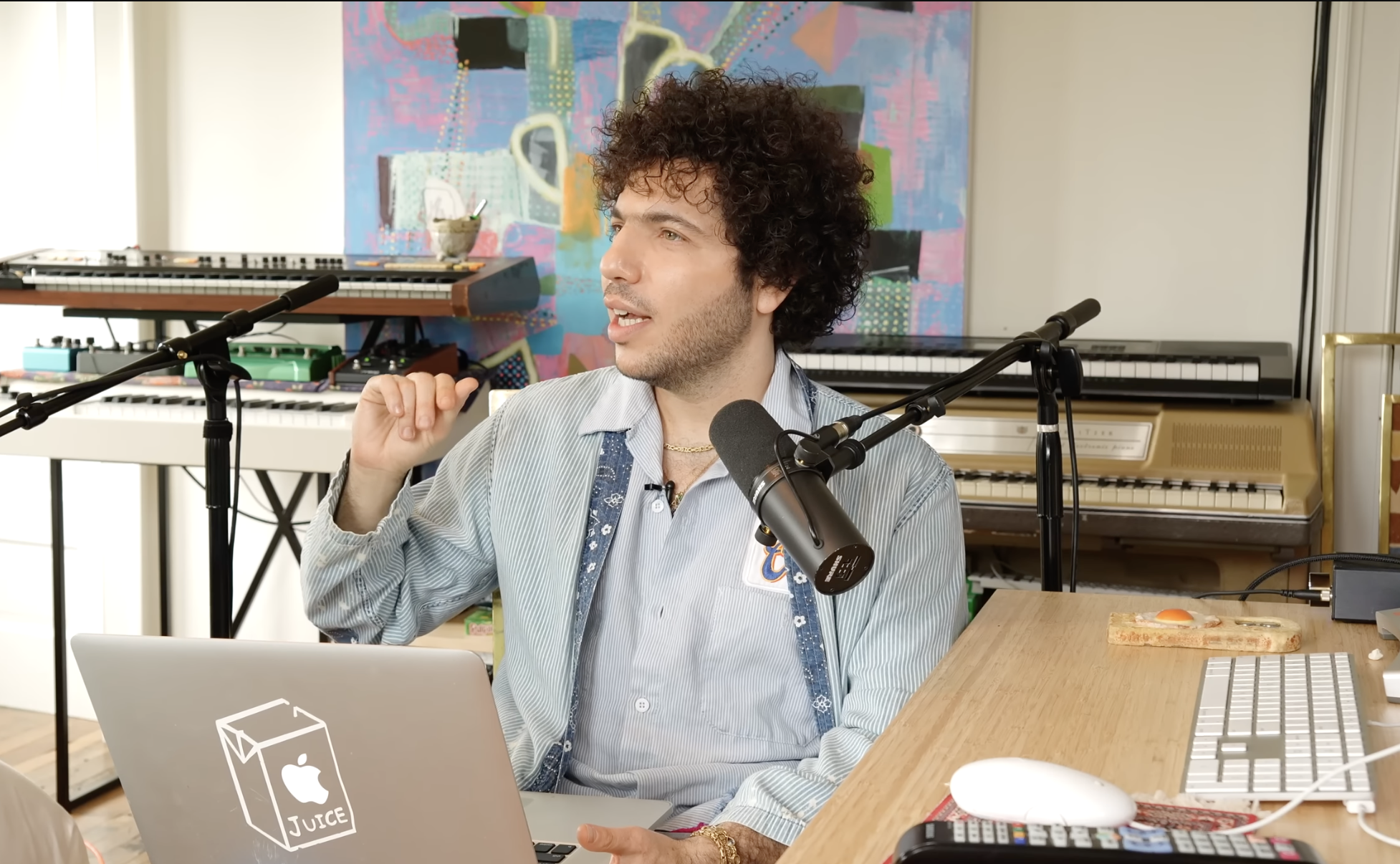
Here’s a story about benny blanco and Ed Sheeran that shows how it's done.
So, the industry folks say, “Hey benny, you should work with this guy Ed Sheeran.” Benny hears Ed’s track “A-Team” and is like, “I want to work with this guy right away.” But instead of the usual corporate email, benny hits the entire email thread with, “I gotta take a sh*t.”
Instant vibe check.
Everyone on benny's team starts freaking out. What did you do? This is a disaster.
But then Ed replies, “Me too.”

The Creative Flywheel
Every creative has felt it—the frustration of starting strong on a project, only to fizzle out halfway through. The ideas dry up, the momentum disappears, and you’re left wondering what went wrong.
The truth is, most of us approach creativity the wrong way. We rely on fleeting inspiration or bursts of motivation, hoping they’ll carry us through.
But the creatives who achieve mastery—those who produce consistently for years—don’t rely on chance. They use systems.
Let’s call it a Creative Flywheel.

Now Is the Best Time to Reset Your Focus Skills
Confused. Dazed. Scatterbrained.
It can often feel frustrating to make up your mind to focus, but to feel unable to do so.
To set down a path of focus—to write a song, practice our instrument, work on a design—only to be offered a gleaming off-ramp in the form of a distraction from our phone.
It even happens to people trying to write a newsletter about focusing. My phone has buzzed 3 times since I started writing this newsletter.
Each notification from our phones is part of a habit-reward loop that promises a potential dopamine release for our brains.
We know that there is a war going on in the marketplace, and that our attention is the ultimate prize. Tech companies, advertising companies, even nonprofits and other creatives. All want to win the next second of our attention.
But I want to invite you to a different path. Now is the best time to disengage from our distracted networks of notifications and reengage your focus on what really matters.
This holiday season, make a plan to practice building the skill of focus in your creative life.